

New AI Cat App, AI in the White House and Scientific Breakthroughs
26th June
Welcome to The Aigency Works Dispatch, your backstage pass to what's fresh, fascinating, and flying off the innovation shelves in the world of AI. From breakthrough tools to bold new use cases, we're serving up bite-sized updates to keep you (and your Aigents) ahead of the curve. Let's dive into what made waves this week
Purrr-kemon Go?
CatchCat is a new app that turns the cats in your neighbourhood into collectible cards. You open it, point your phone at a cat, take a photo, and the on-device AI identifies the breed and assigns it a rarity level ranging from common all the way up to legendary. The whole thing happens locally on your phone without the image ever being uploaded to a server, which is both a nice privacy touch and an impressive technical achievement for what is, on the surface, an app about photographing cats. It was built entirely by one German developer named Sebastian Seidel, and it is his second app. Demand has already outpaced the servers. A shared map lets users see cat sightings from other players nearby, which means it is also accidentally one of the more wholesome community features to come out of the app world in years.

The cat collecting angle is charming, but the real story here is what it says about where AI development has landed. A camera-based game with real-time breed detection, rarity classification, and a live community map would have required a full studio and a significant budget a few years ago. One developer shipped it as a side project. That is not a small thing. The barrier between "idea" and "fully functional AI-powered product" has dropped dramatically, and CatchCat is a fun, low-stakes illustration of exactly that shift. The cats are not complaining about it either.
Source: Sebastian Seidel / App Store listing
AI Sepsis Spotter
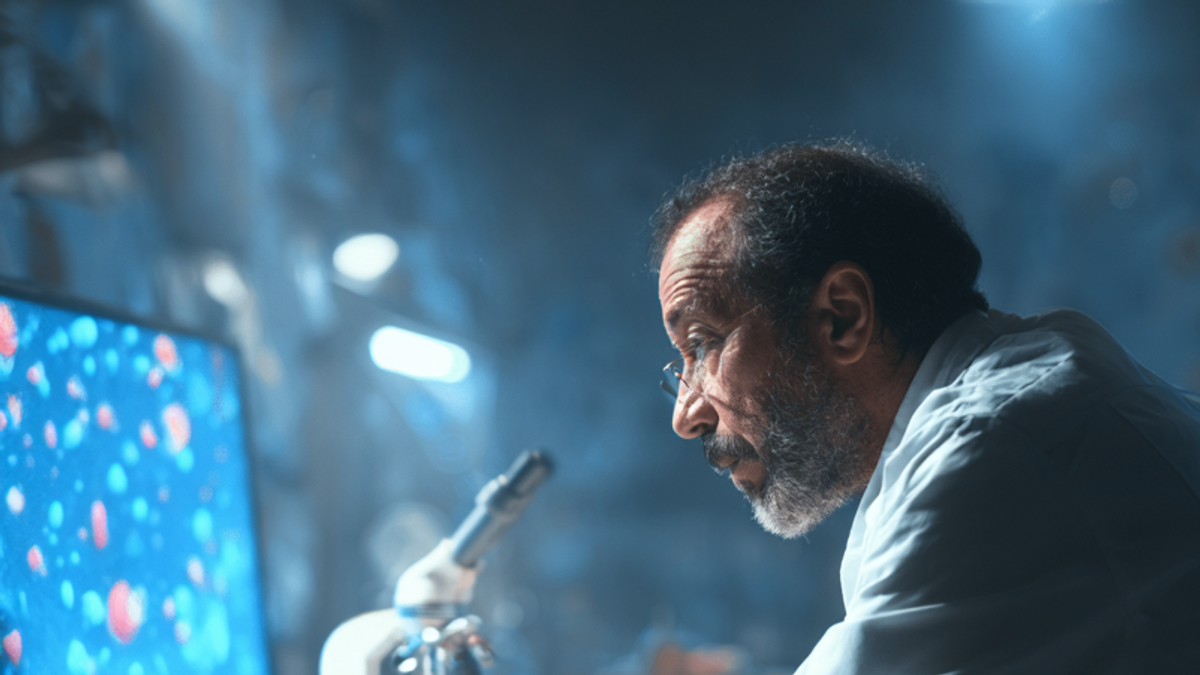
Most AI news is about chatbots, image generators, and automation taking jobs. This one is different. Tampa General Hospital has been running an AI system called the Sepsis Hub, built on Palantir's platform, that continuously monitors real-time patient data including vital signs, lab results, and medical history to catch sepsis before it becomes critical. Sepsis is a life-threatening response to infection that kills fast and is notoriously difficult to spot early. The system does not make decisions for doctors. It flags warning signs earlier than a human monitoring multiple patients simultaneously could reliably do, helping clinical teams prioritise and coordinate care before things escalate. The results are hard to argue with: a reduction in sepsis mortality of more than 50% and over 700 lives saved since the system launched.
The reason this story matters beyond the hospital it is happening in is the template it represents. AI in healthcare gets talked about in grand, sometimes alarming terms, full of predictions about robots replacing doctors and algorithms making diagnoses. The reality of where it is having the most impact right now is quieter and more practical than that. It is pattern recognition across messy, real-time data at a scale and speed that humans cannot sustain across an entire ward. Nobody is being replaced. Clinicians are just getting a much better early warning system. If this model scales across more hospitals, the number of lives it touches stops being a statistic and starts being something much bigger.
Source: Tampa General Hospital / Healthcare IT News — 'Palantir AI Sepsis Hub Reduces Mortality by Over 50% at Tampa General'
Jailbreak proof?

The White House has reportedly told Anthropic that Claude's next major model should be impossible to jailbreak before it is cleared for release. For anyone not deep in the AI weeds, a jailbreak is essentially a trick that convinces an AI to ignore its own safety rules, getting it to say or do things it was specifically designed not to. The ask sounds reasonable on the surface. The problem, according to most experts in the field, is that it may not be a promise any AI company can actually keep. As models become more powerful and more capable, the surface area for loopholes grows with them. Security researchers have consistently shown that even well-designed systems can be nudged into unexpected behaviour with the right framing.
What makes this story interesting is the wider conversation it is forcing. For years the AI safety debate lived mostly in research papers and conference panels. Now the White House is setting conditions on model releases, which is a meaningful shift in how seriously governments are treating the control problem. Whether or not a truly unjailbreakable model is technically achievable, the fact that it is now a political requirement changes the dynamic for every major lab. The question is no longer just "is this model impressive?" It is "can you prove it stays in bounds?" That is a much harder question to answer, and the industry is going to be living with it for a while.
Source: WIRED — 'The White House Wants Anthropic to Make Claude Impossible to Jailbreak'